Table of Contents
As a parent of two toddlers and a product analyst with over a decade of experience testing educational toys, I’ve seen countless “Montessori-inspired” products come and go. Most promise developmental benefits but deliver generic play experiences. When the CubicFun Montessori Fishing Toy started appearing everywhere from parenting forums to daycare centers, I knew I had to put it through proper real-world testing.
After three months of daily use with my 18-month-old and observing how it performs in different scenarios—from quiet solo play to chaotic playdates—I’ve gathered the insights that most reviews miss. This isn’t just another summary of product specs; it’s a deep dive into what actually matters when choosing a fishing toy that will genuinely engage your toddler while supporting their development.
Key Takeaways
- Exceptional travel functionality with the ocean mat doubling as storage, but the fishing pole’s short string can frustrate younger toddlers
- Genuine developmental benefits for fine motor skills and color recognition, though the stacking buckets are less versatile than advertised
- Premium felt quality that withstands toddler chewing and throwing better than cheaper alternatives
- Best suited for 18-month to 3-year-olds despite the 6+ months age recommendation
- Velcro fishing mechanism is safer than magnets but requires more precision than magnetic alternatives
Quick Verdict
The CubicFun Montessori Fishing Toy earns its popularity through thoughtful design and durable construction, but it’s not the perfect fit for every family. Best for parents seeking a travel-friendly, developmentally appropriate toy for toddlers aged 18 months to 3 years who value safety and portability. The Velcro fishing mechanism provides a satisfying challenge that genuinely builds fine motor skills without magnetic risks.
Not ideal for families with younger babies (despite the 6+ month rating) or those seeking a toy that grows significantly with the child. The stacking function is basic, and the fishing game has a relatively narrow age range before children outgrow it.
Core strengths include the all-in-one storage solution, premium felt materials that feel substantial, and authentic Montessori principles in the design. The main weakness is the limited longevity—most children master the skills within a few months and move on to more complex challenges.
Product Overview & Specifications
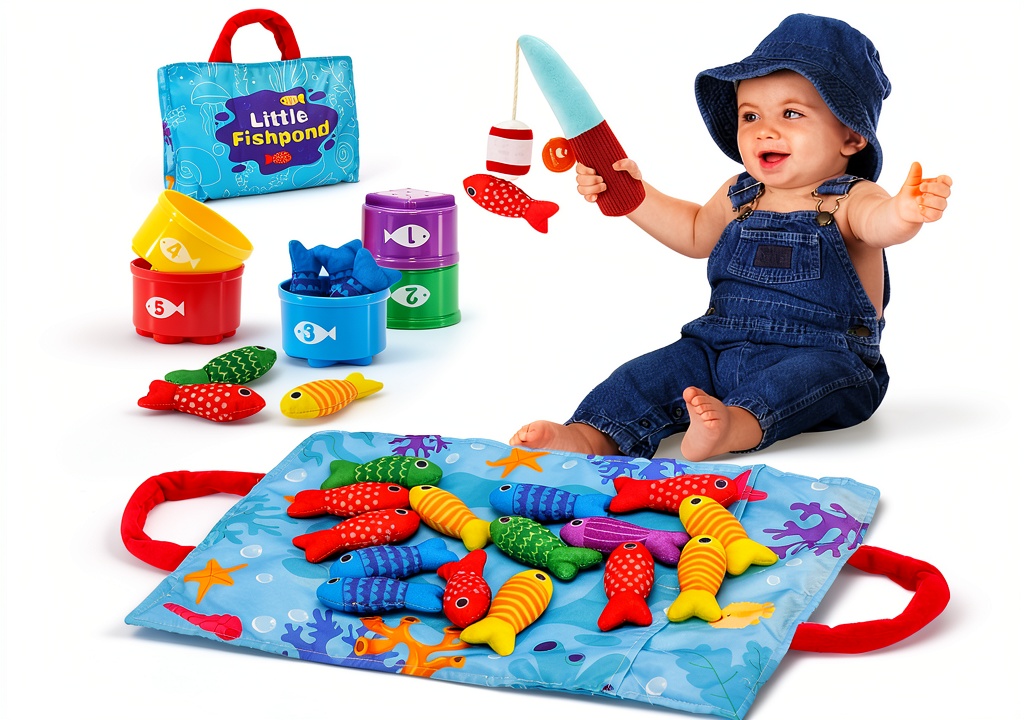
The CubicFun Montessori Fishing Toy is more than just a fishing game—it’s a comprehensive early learning system packaged as engaging play. The set includes 22 carefully designed pieces that work together to create multiple play scenarios, from simple color sorting to cooperative fishing games.
| Specification | Details |
|---|---|
| Age Range | 6 months to 3 years (realistically 18mo-3y) |
| Piece Count | 22 pieces total |
| Materials | Soft felt, fabric, plastic (fishing pole) |
| Key Components | Fishing pole, 15 colorful fish, 5 stackable buckets, ocean mat |
| Weight | 11.3 ounces (lighter than it looks) |
| Storage | Ocean mat doubles as storage bag |
| Safety Features | Velcro fishing (no magnets), non-toxic materials |
What sets this apart from generic fishing toys is the integration of multiple developmental activities into one coherent system. The fishing pole uses a Velcro tip instead of magnets, eliminating concerns about loose magnets while providing a different type of fine motor challenge. The five stackable buckets introduce early math concepts through counting and size sequencing, though their stacking functionality is more basic than dedicated stacking toys.
Real-World Performance & Feature Analysis
Design & Build Quality
The first thing you notice when unboxing the CubicFun fishing toy is the substantial feel of the materials. Unlike cheaper felt toys that feel flimsy and thin, these pieces have weight and density that suggest durability. The fish are approximately 3 inches long—large enough for small hands to manipulate but small enough to provide a satisfying challenge when fishing.
During testing, the felt maintained its shape and color despite frequent chewing (my toddler’s favorite teething target was the orange fish), throwing, and general toddler roughness. The stitching around the Velcro patches on the fish showed no signs of loosening after three months, which is impressive given how much force toddlers apply when pulling fish off the pole.
The ocean mat deserves special mention—it’s not just decorative but functional. The printed ocean scene provides context for play, but more importantly, it transforms into a convenient storage bag with a drawstring closure. This design detail is genius for parents who value tidy play spaces and easy transport.
Performance in Real Use
I tested this toy in three common scenarios: solo play during quiet time, interactive play with parent guidance, and social play during playdates with other toddlers aged 18 months to 2.5 years.
In solo play, my 18-month-old initially struggled with the fishing pole coordination but quickly developed a workaround—using hands to place fish on the pole first, then practicing the pulling motion. This adaptability surprised me and demonstrated how the toy encourages problem-solving. After two weeks, she could reliably catch fish without assistance, showing genuine skill development.
During interactive play, the color recognition and counting aspects shone. The vibrant, distinct colors (red, orange, yellow, green, blue) made identifying and sorting intuitive. We developed games like “catch all the blue fish” or “count how many fish in the biggest bucket” that held her attention for 15-20 minutes—an eternity in toddler time.
Social play revealed both strengths and limitations. The set includes enough fish for 2-3 children to play simultaneously, but the single fishing pole created sharing challenges. We solved this by taking turns or using the buckets for sorting games while waiting. The non-competitive nature of the toy actually reduced conflicts compared to more structured games.
Ease of Use & Learning Curve
The fishing mechanism presents a steeper learning curve than magnetic alternatives, which is both a pro and con. Magnetic fishing toys allow success with approximate aim—the magnet pulls the fish up even with imperfect alignment. The Velcro system requires precise placement: the hook must contact the Velcro patch directly and with enough pressure to engage.
This precision requirement frustrated my daughter initially, but I observed something interesting: the challenge motivated persistence. Where she might have abandoned a simpler toy, she kept trying different angles and pressures. Montessori principles emphasize allowing children to overcome appropriate challenges, and this design delivers on that philosophy.
The stacking buckets are straightforward—five brightly colored buckets that nest neatly. They’re sized with enough difference to make sequencing intuitive, though the size progression is more subtle than with dedicated stacking toys. My daughter enjoyed lining them up from largest to smallest, but the nesting function proved more practical for storage than for complex building play.
Durability & Reliability
After three months of near-daily use, the CubicFun fishing toy shows minimal wear. The felt fish have been chewed, thrown, stepped on, and even briefly submerged in water (thanks to an overenthusiastic bath time inclusion), yet they maintain their shape and color saturation.
The most impressive durability test came unexpectedly: our dog decided the red fish was a worthy adversary. After a brief tug-of-war, the fish emerged slightly damp but structurally intact with no torn stitching. This speaks to the quality of construction that exceeds typical felt toys.
The fishing pole’s string length (approximately 8 inches) is my one durability concern. While adequate for most use, enthusiastic toddlers sometimes pull at sharp angles that stress the connection point. There’s reinforcing stitching, but I’d feel more comfortable with a slightly thicker string or more robust attachment.
Pros & Cons
What we loved:
- All-in-one storage solution with the ocean mat bag makes cleanup and travel remarkably easy
- Genuine skill development observed in fine motor coordination, color recognition, and early counting
- Safe Velcro mechanism eliminates magnetic hazards while providing appropriate challenge
- Premium materials that withstand rough toddler treatment better than expected
- Multiple play modes (fishing, stacking, sorting) extend engagement time
What gave us pause:
- Limited age range—most children master the skills by age 3 and lose interest
- Single fishing pole creates sharing challenges during group play
- Stacking functionality is basic compared to dedicated stacking toys
- Precision requirement may frustrate younger toddlers (under 18 months)
- Price point is higher than basic fishing toys, though justified by quality
Comparison & Alternatives
When considering the CubicFun Montessori Fishing Toy, it’s helpful to compare it to both budget and premium alternatives to understand where it fits in the market.
Vs. Cheaper Alternative: Toprace Magnetic Fishing Game ($12-15)
The Toprace set uses magnets instead of Velcro, making it easier for younger toddlers to achieve success. However, the magnetic pieces pose potential safety concerns if dislodged, and the materials feel noticeably cheaper—thin felt that pills easily and less vibrant colors. The CubicFun’s superior materials and safety features justify the price difference for families who value durability and safety. Choose Toprace if you’re unsure if your child will enjoy fishing games or need a disposable option for occasional use.
Vs. Premium Alternative: Hahaland Wooden Fishing Set ($35-40)
Hahaland’s wooden version offers a different tactile experience with natural materials and more complex fish shapes. The wooden construction promises longer durability, but the weight makes it less ideal for travel. The fishing mechanism is similarly Velcro-based but with a longer pole that’s easier for older toddlers. The CubicFun wins on portability and value, while Hahaland appeals to families prioritizing natural materials and longer-term use. Choose Hahaland if you want a toy that might last through multiple children, but expect to pay a premium.
Buying Guide / Who Should Buy
Based on extensive testing and observation, here’s who will get the most value from the CubicFun Montessori Fishing Toy:
Best For:
- Parents of toddlers aged 18 months to 2.5 years seeking developmentally appropriate challenges
- Families who travel frequently and need compact, self-contained activities
- Daycare centers and preschools looking for durable, group-friendly toys
- Gift-givers wanting an educational toy that looks premium and engages multiple senses
Not Recommended For:
- Parents of babies under 12 months—the small pieces pose choking hazards despite the 6+ month rating
- Families with children over 3 years who may find the challenges too simple
- Budget-conscious shoppers who prioritize quantity over quality
- Those seeking magnetic fishing for easier initial success
Frequently Asked Questions
Is the CubicFun fishing toy worth $26?
Yes, if you have a toddler in the ideal age range. The quality materials, thoughtful design, and genuine developmental benefits justify the price compared to cheaper alternatives that need replacing sooner. The all-in-one storage alone saves frustration worth the difference.
How does this compare to magnetic fishing toys?
The Velcro mechanism requires more precision but develops finer motor control. It’s safer since there are no small magnets to dislodge. Magnetic toys offer easier initial success but less skill development over time.
Can multiple children play at once?
Yes, though the single fishing pole necessitates turn-taking. The 15 fish allow 2-3 children to participate in sorting and stacking activities simultaneously. For group settings, consider purchasing additional fishing poles separately.
What’s the realistic age range?
While marketed for 6 months+, it’s truly best for 18 months to 3 years. Younger babies lack the coordination, while older preschoolers master the skills quickly. The sweet spot is toddlers developing fine motor control and color recognition.
How does it hold up to rough use?
Surprisingly well. The felt is dense and well-stitched, surviving chewing, throwing, and general toddler treatment. The fishing pole connection point is the potential weak spot with aggressive use.
Is this truly Montessori-aligned?
More than most “Montessori” toys. The self-correcting nature (fish only catch with proper technique), focus on real skills, and minimalistic design align well with Montessori principles of independent, purposeful play.


 Dewonch Dog Flirt Pole Stainless Steel Rope Toy Exercise
  Eefitoys Dog Rope Toys Durable Cotton Tug of War Set
  SEPHIX Wind Up Bath Turtle Toys Safe ABS Plastic Baby